Unpacking How Regional Licensing Rules Shape Game Library Depth in Cross-Border Mobile Gaming Networks
Carlo Simon · Aug 26, 2026
Unpacking How Regional Licensing Rules Shape Game Library Depth in Cross-Border Mobile Gaming Networks
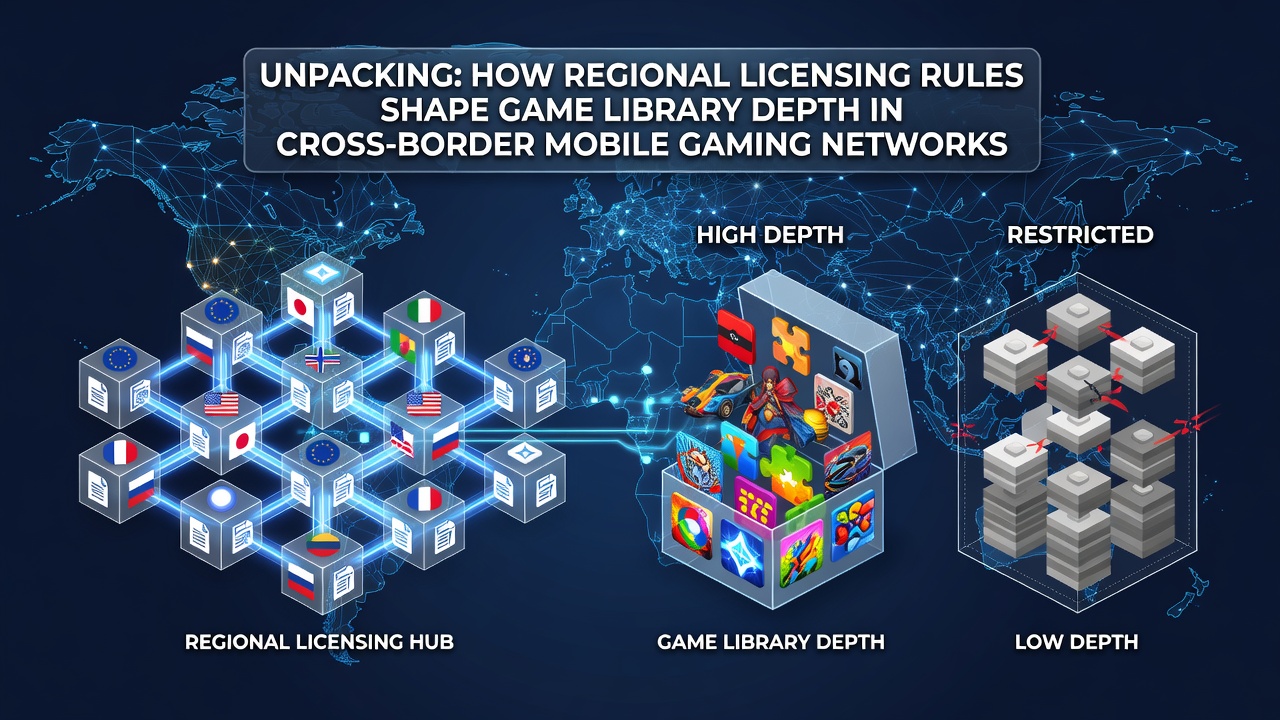
Regional licensing rules determine which titles appear in mobile gaming libraries when players cross borders, and these frameworks create measurable differences in available content depth across networks. Licensing systems in various jurisdictions set requirements for content approval, age ratings, and distribution rights that developers must satisfy before games reach users in specific territories, and this process directly influences the variety and quantity of titles accessible through cross-border platforms.
Core Mechanisms of Regional Licensing in Mobile Gaming
Mobile gaming networks operate under multiple overlapping licensing regimes where each region enforces distinct criteria for game certification, and these criteria range from content moderation standards to data localization mandates that affect how developers package and release titles. In practice, a game approved in one market may require separate submissions and modifications to meet rules in another, which lengthens approval timelines and reduces the number of simultaneous releases across borders. Data from industry tracking services shows that average approval periods vary significantly, with some Asian markets completing reviews in weeks while others extend into months, and these delays compound when developers manage simultaneous submissions for global audiences.
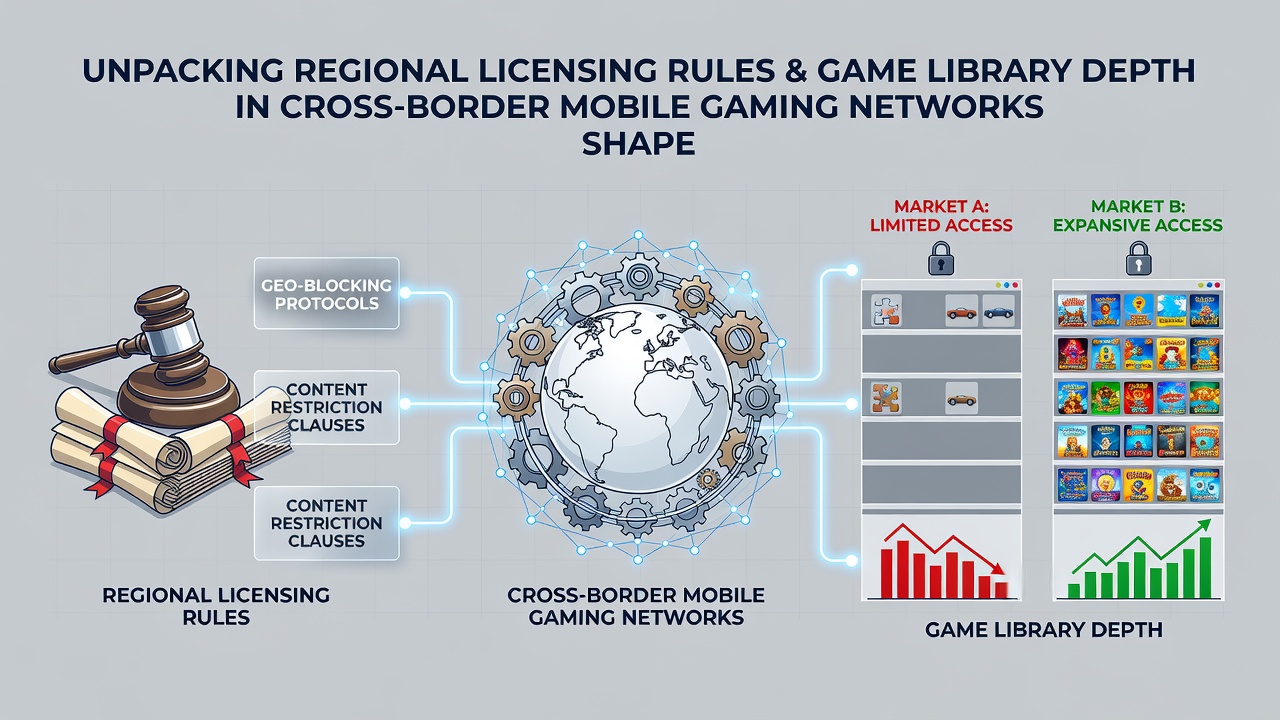
Content classification systems play a central role because they assign age ratings and restrict certain mechanics or themes, and cross-border networks must filter libraries accordingly to remain compliant. For instance, violence thresholds or monetization features that pass in North American jurisdictions often trigger additional scrutiny elsewhere, leading platforms to curate region-specific catalogs that limit depth for traveling or multinational users. Observers note that these filters create visible gaps where popular titles appear in one library but remain absent from others despite identical technical compatibility.
Effects on Library Depth Across Borders
Library depth refers to the total count and diversity of games available within a given region, and licensing rules shape this metric by controlling entry points for new releases. When developers face high compliance costs in multiple territories, they prioritize markets with streamlined processes, which results in uneven distribution where some regions receive full catalogs while neighboring areas receive only subsets. Research indicates that this prioritization produces measurable disparities, with data collected through platform analytics revealing that users in highly regulated zones encounter 30 to 40 percent fewer titles than those in less restrictive environments during comparable timeframes.
Cross-border mobile gaming networks attempt to mitigate these gaps through geo-adaptation tools, yet licensing still imposes hard limits because rights holders must secure separate distribution agreements for each territory. And while some platforms use dynamic libraries that adjust based on user location, the underlying approval requirements remain fixed, so depth fluctuates as players move between regulatory zones. What's interesting is how these adjustments affect engagement patterns, since users who frequently cross borders encounter rotating availability that fragments their access to ongoing game updates and expansions.
Case Patterns Observed in August 2026 Data Releases
August 2026 brought updated compliance reports from several regulatory bodies that highlighted ongoing adjustments in licensing procedures, and these reports documented shifts in approval volumes for mobile titles across the Asia-Pacific and European corridors. Figures reveal that networks operating in multiple jurisdictions recorded changes in library composition following new guidelines on in-app purchase disclosures, and developers responded by segmenting releases to align with the updated requirements. Those who've tracked these trends point to specific examples where games with complex monetization models saw delayed rollouts in certain regions, thereby reducing overall depth until certifications cleared.
One study revealed patterns where cross-border users experienced temporary library shrinkage when platforms applied updated filters mid-year, and this occurred because licensing amendments took effect on staggered schedules. The reality is that such staggered implementation creates transitional periods where depth varies even within the same network, depending on a user's registered location at the time of access. Researchers discovered that these variations correlate with user retention metrics, as inconsistent availability discourages continued play across borders.
Industry Responses and Technical Adaptations
Developers and platform operators have introduced modular content systems to address licensing constraints, and these systems allow selective activation of features based on detected regional rules without requiring entirely separate builds. According to reports from the Entertainment Software Association, many studios now design games with configurable elements from the outset, which helps maintain broader library presence despite differing approval standards. Yet this approach still demands upfront investment in testing and certification for each target market.
Platforms also rely on partnerships with local distributors who hold the necessary licenses, and these partnerships expand access in some areas while restricting it in others where no equivalent partner exists. Data shows that markets with established local intermediaries maintain deeper libraries over time because they facilitate faster compliance pathways. In contrast, emerging markets without such infrastructure see slower growth in available titles, and this gap persists even as underlying technology advances.
Conclusion
Regional licensing rules continue to define the boundaries of game library depth in cross-border mobile gaming networks through approval processes, content restrictions, and distribution agreements that vary by jurisdiction. As of August 2026, available data confirms that these rules produce persistent differences in catalog size and variety, and networks respond with technical and partnership strategies that partially offset but do not eliminate the effects. Future developments in regulatory harmonization may alter these dynamics, yet current patterns indicate that licensing remains a primary determinant of what players can access regardless of network connectivity.